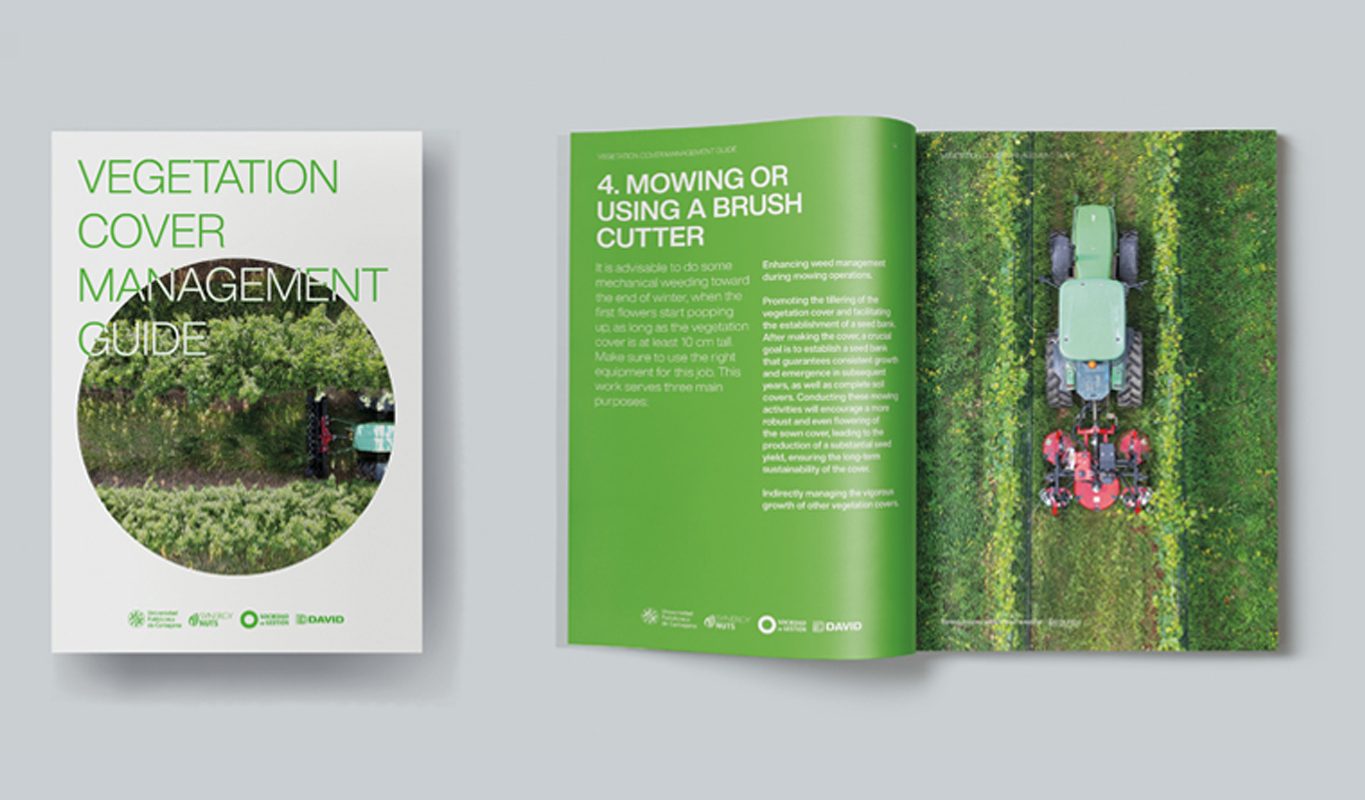
In woody crops, working between plants demands ever-increasing precision. Farmers need to eliminate weeds, promote proper soil management, make progress in reducing herbicides, and get close to the trunk without damaging it. At this point, the electrohydraulic undervine weeder stops being a simple implement and becomes a key tool within modern agricultural practices, fostering a more efficient, technical, sustainable, and environmentally friendly agriculture.
ID David has built its trajectory precisely in this field: listening to real fieldwork and transforming that experience into reliable solutions for vineyards, fruit trees, olive groves, and almond trees. Its evolution cannot be understood solely from the manufacturing of agricultural implements, but from a way of innovating closely linked to the needs of farmers and the evolution of an increasingly high-tech agriculture.
ID-WEEDER: precisión entre plantas
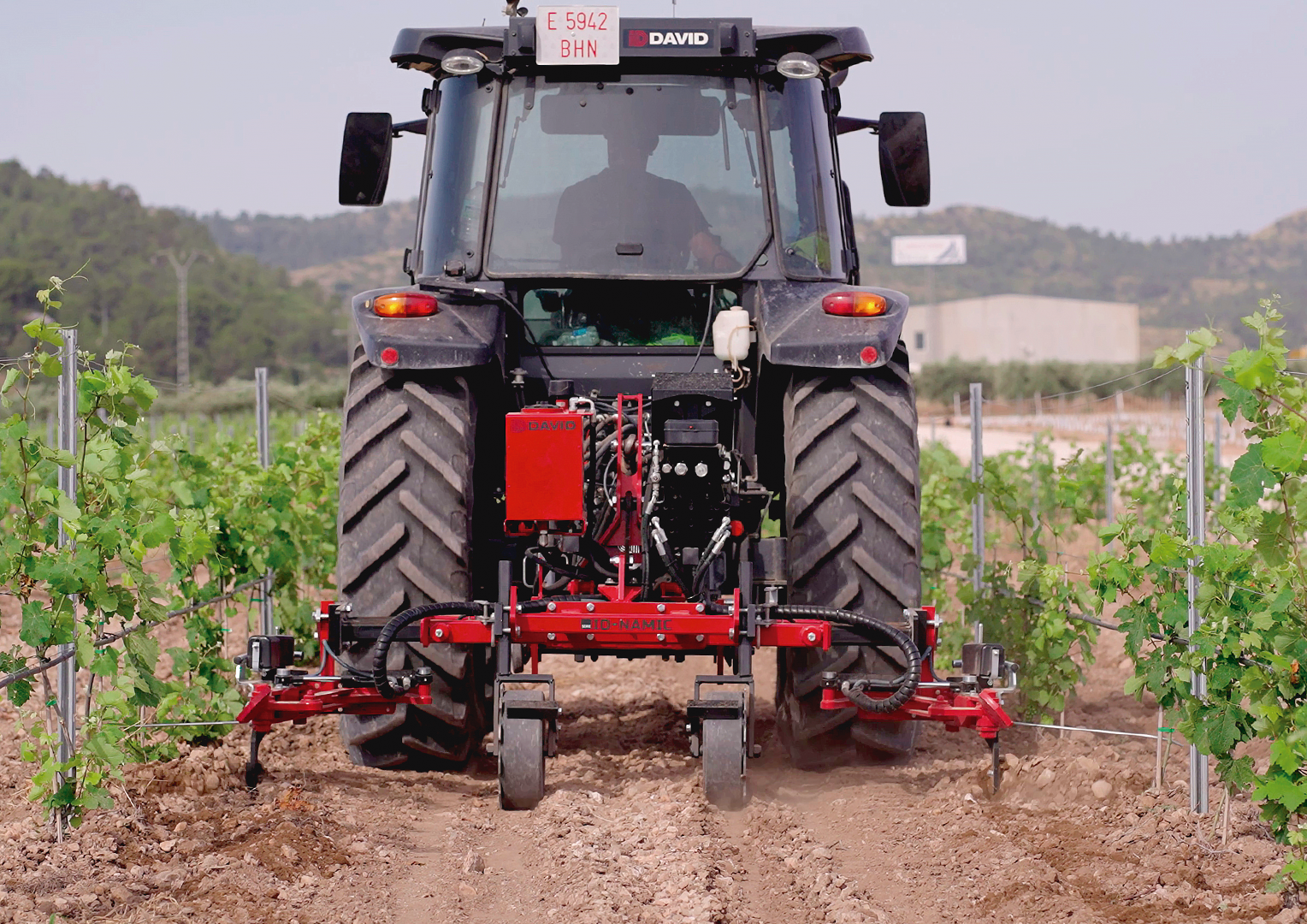
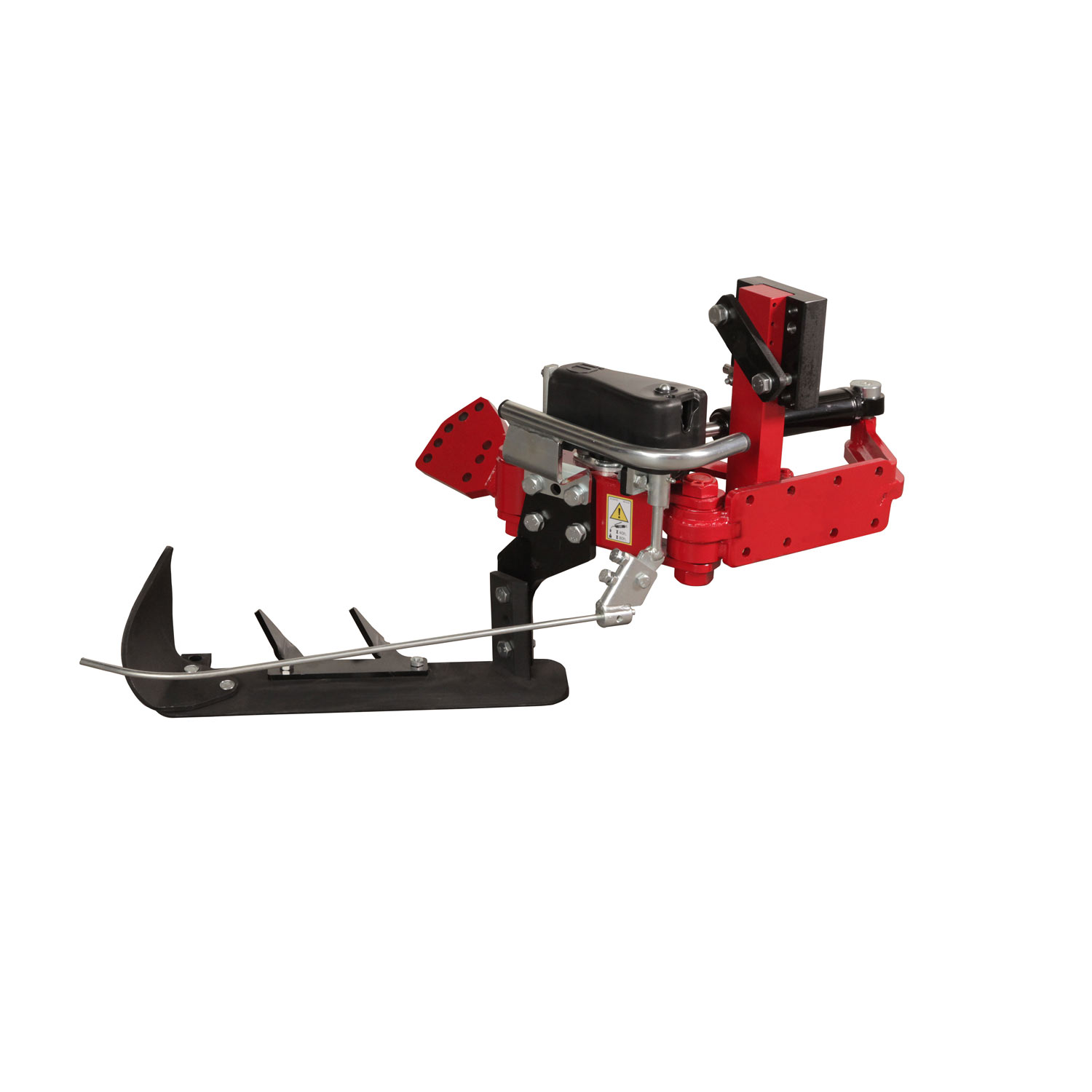
ID-WEEDER represents one of the best examples of this evolution. It is an electrohydraulic undervine weeder designed for mechanical weeding and tillage between plants in woody crops. Its goal is clear: to work close to the trunk, keep the crop line clean, facilitate crop line maintenance, and improve soil management with a stable and safe response.
Its difference lies in how it has been conceived; it is not a rigid solution, but an equipment adaptable to different chassis, cultivators, and work configurations. This versatility allows it to respond to different planting frameworks, variable soils, deviations in plant alignment, and the specific needs of each farm.
Parallelogram-radial movement: less travel, more control
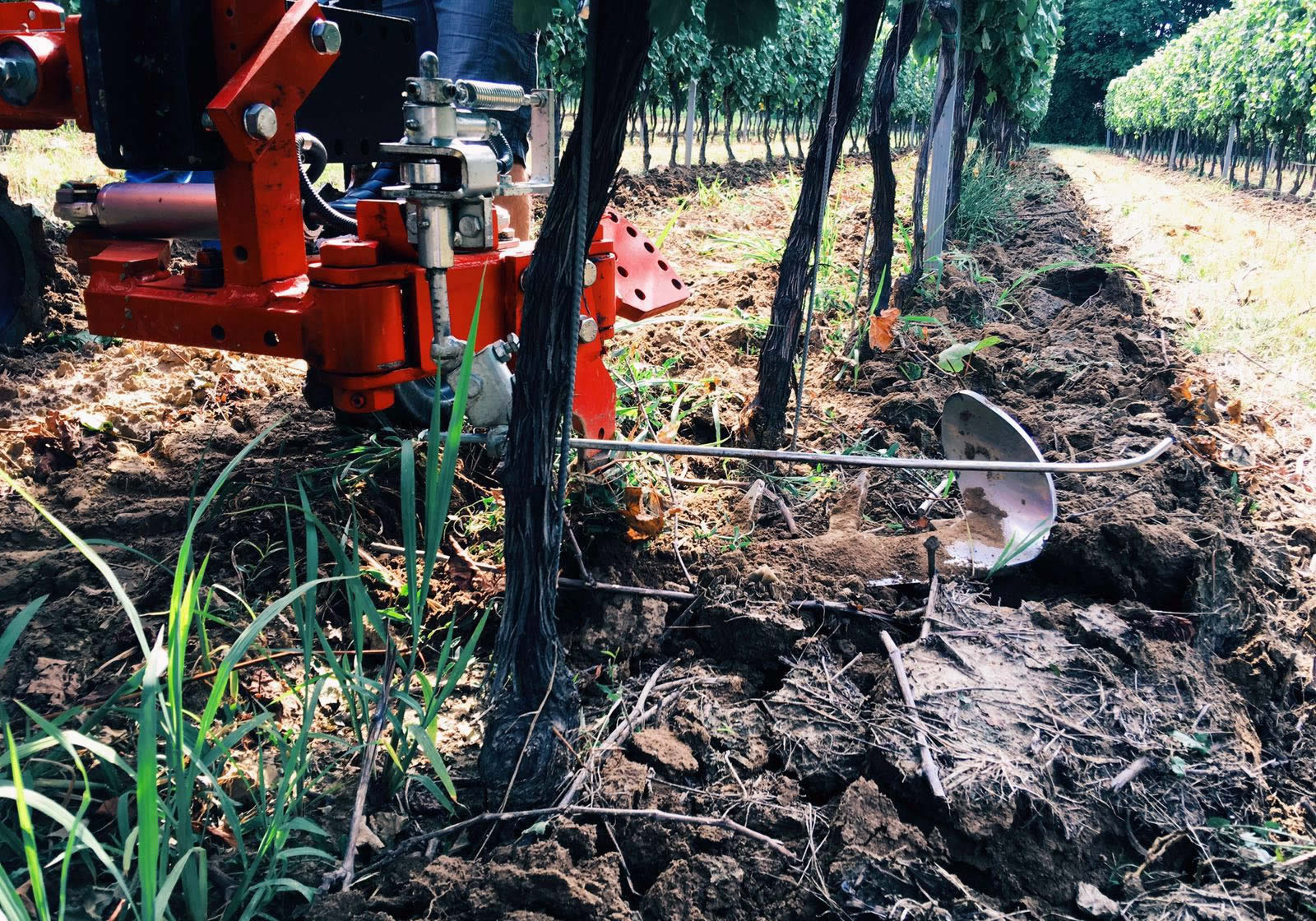
One of the elements that distinguishes ID David undervine weeders is their parallelogram-radial movement. This architecture allows the arm to retract only as much as necessary to clear the plant, maintaining a precise, smooth, and controlled trajectory. The radial movement provides speed around the trunk, while the parallelogram displacement improves stability and tolerance during work. The combination of both reduces unnecessary movements, makes better use of the worked surface, and helps to protect the crop throughout the working day.
In vineyards and fruit trees, where every centimeter counts, the advantage is not solely in entering and exiting between plants. It is in doing so with repeatability, safety, and a mechanical response that keeps pace with the real rhythm of the field.
These characteristics make the undervine weeder an especially effective solution for farmers looking to improve productivity, reduce reliance on chemical treatments, and have an undervine weeding machine capable of adapting to different types of farms.
Sensors, electronic sensor and working safety
The ID-WEEDER incorporates an adjustable and progressive electronic sensor, induction electronic sensors, a hydraulic pressure regulator, and protection systems designed to work in demanding conditions. The sensor detects the plant and activates the retraction of the arm at the right moment. The progressive regulation allows adjusting the sensitivity according to the crop, the age of the plantation, and the working conditions.
This precision is especially important in young plantations, where the trunk is thinner, but also in mature crops, where proximity to the plant remains crucial. Added to this are elements such as automatic closure in the event of breakdowns, the anti-impact protector, and components manufactured with high-resistance materials.
The result is an equipment designed not only to work with precision, but also to offer reliability and protection in daily use.
All this facilitates precise work even when soil conditions, the crop type, or the vegetative development of the plantation change.
From the electrohydraulic undervine weeder to agriculture 4.0
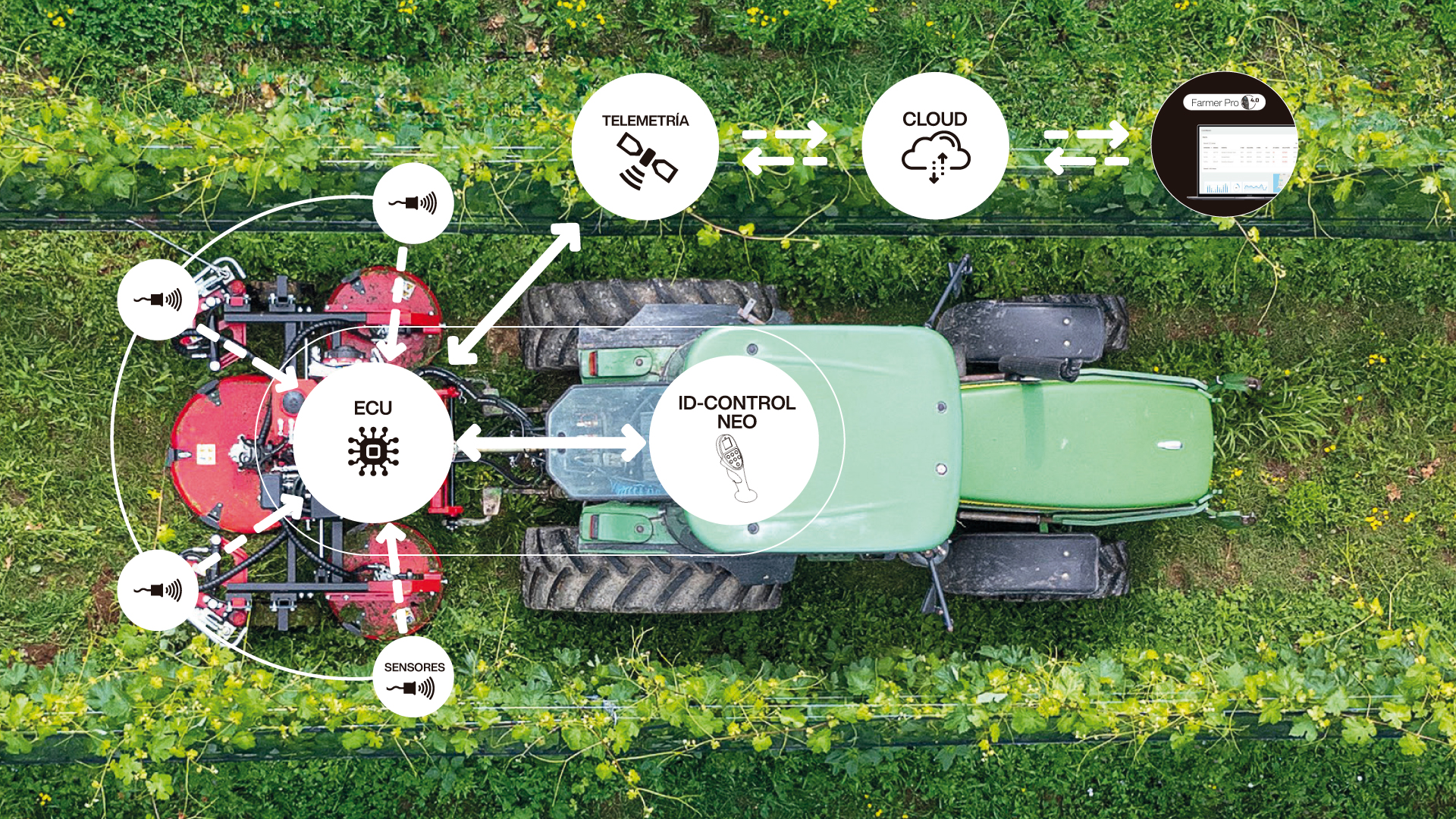
The electrohydraulic undervine weeder was the starting point. Today, that vision has evolved toward smart agricultural machinery solutions, connected and oriented to agriculture 4.0, where electronics, telemetry, and agricultural automation allow working with greater precision, efficiency, and comfort from the tractor cabin.
ID David has integrated control systems, sensors, telemetry, automation, and advanced hydraulic management without losing the essence that has guided its development: precision, safety, efficiency, and durability. Technology changes, but the goal remains the same: to facilitate work between plants with robust and reliable equipment.
With systems like ID PLUS 4.0, control of the implement advances toward a more comfortable and precise management from the cabin. The integration of the ECU and multifunction joystick allows handling specific hydraulic functions without relying on constant manual adjustments. For the operator, this means more control, greater comfort, and a better capacity to adapt during the working day.
This technological evolution allows reducing adjustment times, optimizing machine performance, and decreasing reliance on labor in certain repetitive operations.
In addition, the modular design allows expanding functions, adding features, and updating the firmware, extending the technological life of the machine and preparing it for future needs.
What sets ID David apart from other manufacturers
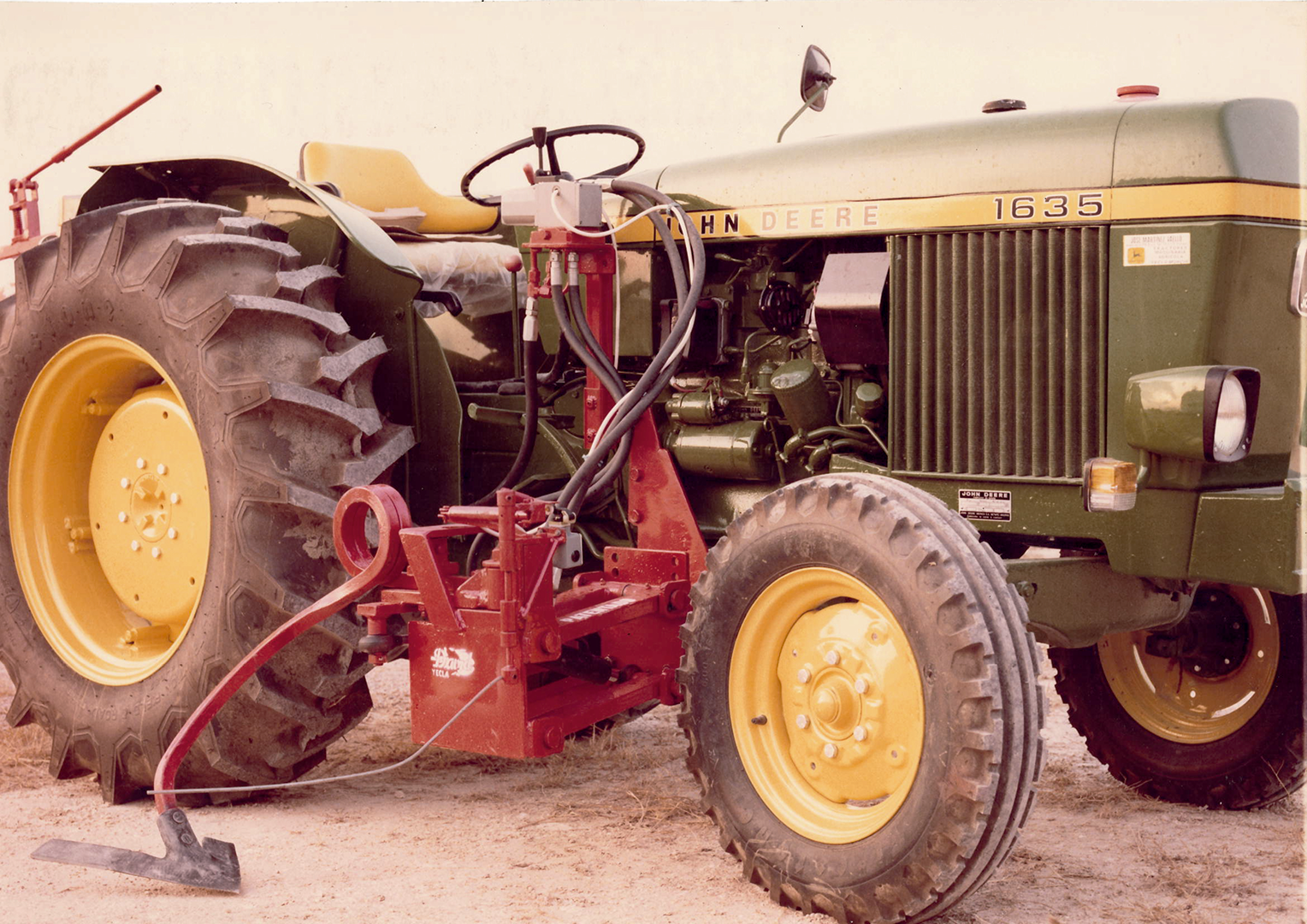
The difference of ID David is based on three pillars: technical trajectory, proprietary innovation, and evolution capacity. The company has not just arrived at the undervine weeder market; it has spent decades developing specialized solutions for woody crops and was recognized at FIMA in 1976 for its development of the electrohydraulic undervine weeder.
Half a century later, that same line of innovation continues with new solutions for hydraulic control, sensor technology, self-regulation, and digitalization. Compared to manufacturers offering hydraulic solutions, sensors, or interchangeable accessories, ID David provides a more comprehensive vision: it integrates mechanics, hydraulics, electronics, safety, modularity, and smart control into its own ecosystem.
Farmers do not only need the tool to retract when it detects a plant. They need the equipment to be easy to adjust, safe, adaptable, and capable of working stably in different soils, crops, and driving conditions. That is where ID David makes the difference.
This philosophy also responds to an increasingly present reality in the sector: farms looking for alternatives to herbicides, improving weed control, reducing environmental impacts, and adapting to new requirements related to organic farming, regenerative agriculture, and sostenibilidad.
Smart-Sense y MFLOW: una nueva generación de intercepas
The evolution of the ID David undervine weeder continues with technologies such as Smart-Sense and MFLOW, developed to improve precision, regulation, and control from the cabin.
Smart-Sense represents an advance in sensitive and self-regulating detection. It allows adapting the sensor sensitivity to working conditions from inside the cabin, facilitating faster and more precise adjustments during operation.
MFLOW focuses on one of the most important factors in the performance of an undervine weeder: hydraulic management. This system allows regulating the machine’s hydraulic power from the cabin, adjusting flow and pressure via joystick and screen, without stopping work or getting off the tractor.
In addition to improving operator comfort, MFLOW helps to use only the required power. This contributes to reducing hydraulic stress and promotes more efficient work.
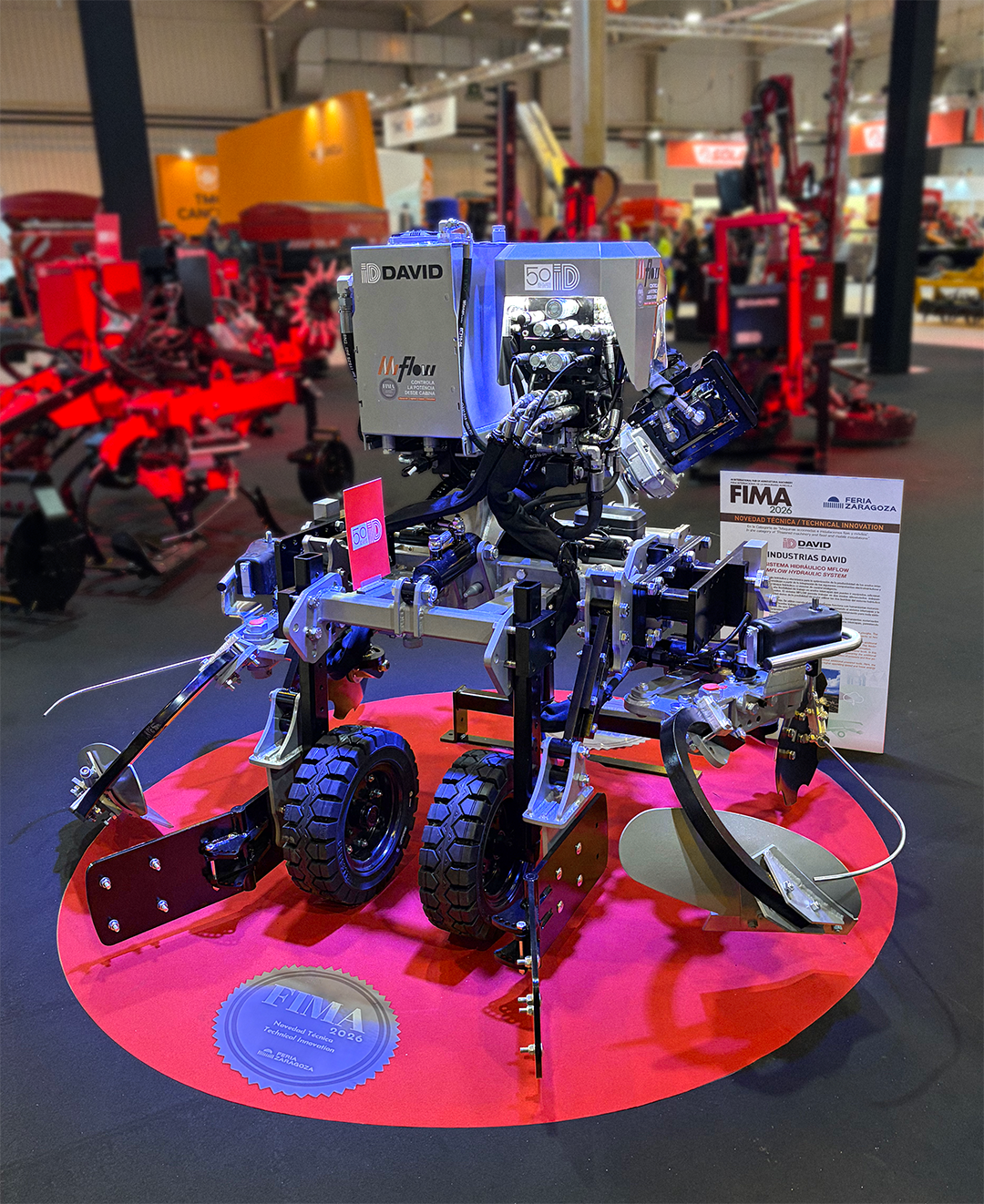
MFLOW by ID David: Technical Innovation Award at FIMA 2026
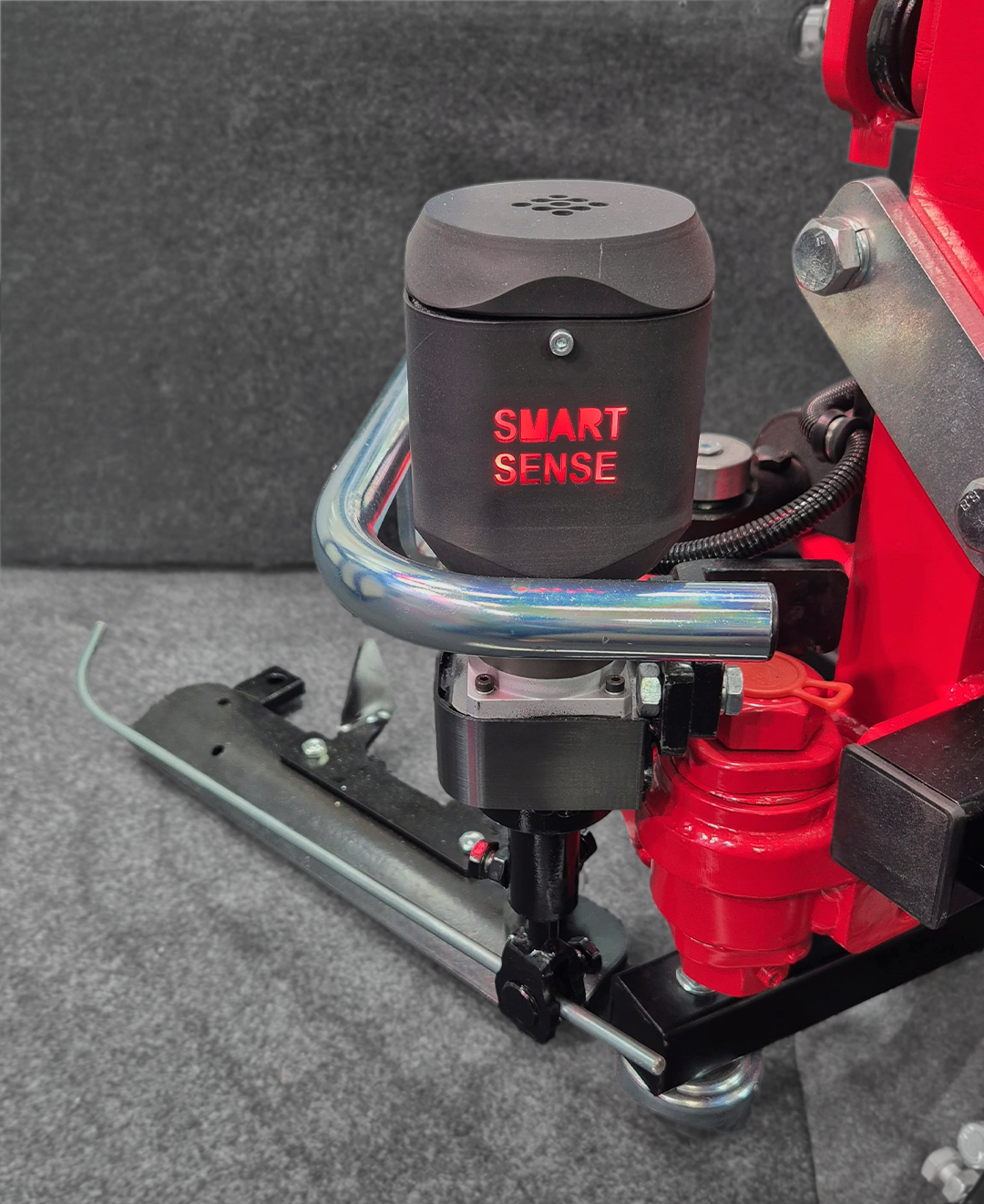
Smart-Sense by ID David: Technical Mention at EIMA 2024
Thanks to these technologies, farmers have an in-row cultivator for fruit trees, almonds, vineyards, or olive groves capable of quickly adapting to different working conditions, improving tilling precision, and maximizing the advantages of mechanical weeding.
In this way, ID David does not only develop electro-hydraulic in-row cultivators. It develops a technological ecosystem that combines mechanics, hydraulics, electronics, sensor technology, and smart control to accompany the evolution of work between plants and between rows.
Solutions adapted to each crop
Each farm faces a different reality. That is why ID David offers a wide range of configurations depending on the crop, the planting layout, the soil type, the tractor, the working system, and the technological level needed by each farmer.


This adaptation is especially important in vineyards, fruit trees, olive groves, almond trees, and other woody crops, where working conditions vary from one estate to another and require specific solutions.
The evolution of the ID David in-row cultivator epitomizes a way of understanding innovation: listening to the farmer, learning from the field, and turning that experience into applied technology. A technology designed to work with greater precision, efficiency, and confidence in an increasingly demanding agriculture, prepared to respond to challenges such as climate change, the reduction of inputs, and the need to develop increasingly sustainable agricultural practices.
ID David does not manufacture a single solution for everyone. It develops specialized technology for each agricultural reality, offering a wide range of solutions for different crops and contributing to a more efficient, profitable, and environmentally friendly agriculture.